

I recently attended a wine event at a new wine bar featuring the emerging biodynamic producer Filipa Pato and her husband, William Wouters. She is visiting the east coast as a guest for Femme Fête this weekend in Boston. The event showcases over 40 female wine makers and importers, featuring panel discussions and tastings.
The tasting at Half Rats a new wine bar, was focused on four of their flagship wines. We began with two sparkling selections: 3B White, a blend of Bical, Maria Gomes, and Cercial, and 3B Rosé, composed primarily of Baga with a touch of Bical. The still wines followed, including Filipa Pato Branco Dinamica 2024, made from Bical and Arinto, and Filipa Pato Baga Bairrada Dinamica 2024, crafted entirely from Baga.
The 3B White, named for Bairrada, Bical, and Beiras, was bright and focused, with lively acidity and mineral precision. The 3B Rosé showed freshness and subtle red fruit character, balanced and dry. The 2024 Bical Branco was textured and expressive, silky on the palate, with notes of melon and honey and a touch of salinity, highlighting the purity of Bical with lift from Arinto.
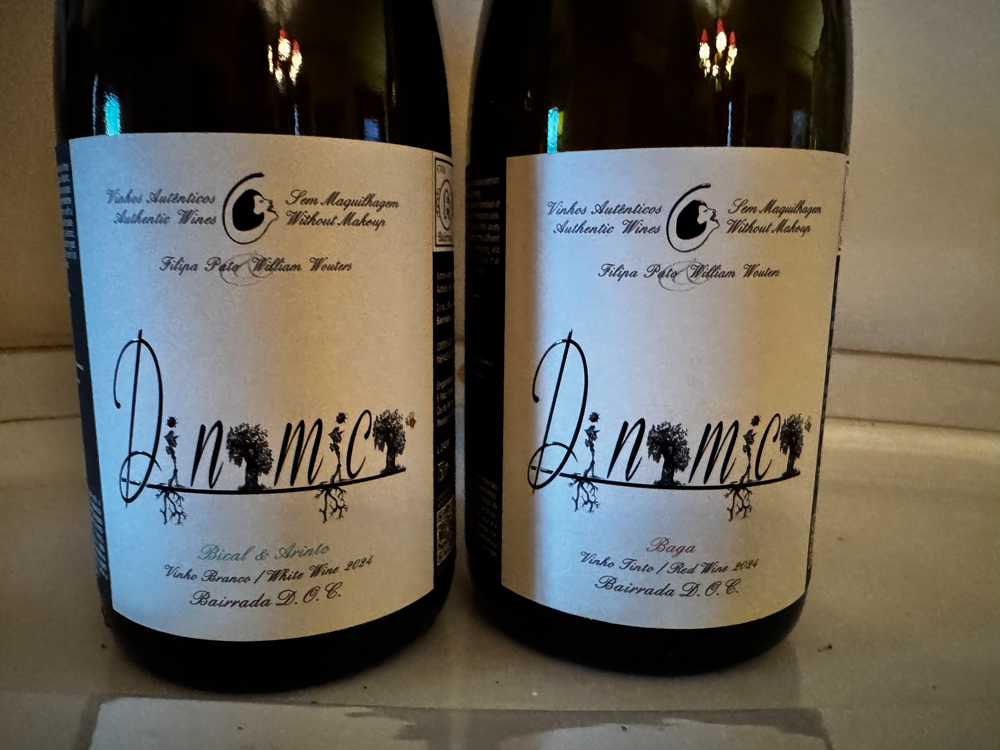
As for the Baga Bairrada Dinamica 2024, it is a delightful and well made wine. Pale ruby in color, it shows medium intensity aromas of black fruit and herbal notes. Dry, with good acidity and moderate tannins, it is more pronounced on the palate, with a long finish. A quality wine and good value. The four tasted wines retail for about $20.
Filipa Pato also produces limited quantities of single vineyard wines such as Bairrada Branco Nossa Calcario, Flos Castanea Orange, Bairrada Bical Tola Baga, and Post Quercus. These were not present at the tasting; however, I look forward to trying them when they become available.
Filipa Pato’s focus is simple: to make great wines from indigenous grapes using Baga, Bical, Maria Gomes, Arinto and Cercial. Grapes are grown using biodynamic practices. In the winery, they handle the grapes with minimal intervention and strict monitoring, allowing them to express themselves. The goal is to showcase the terroir and produce wines “without makeup.”
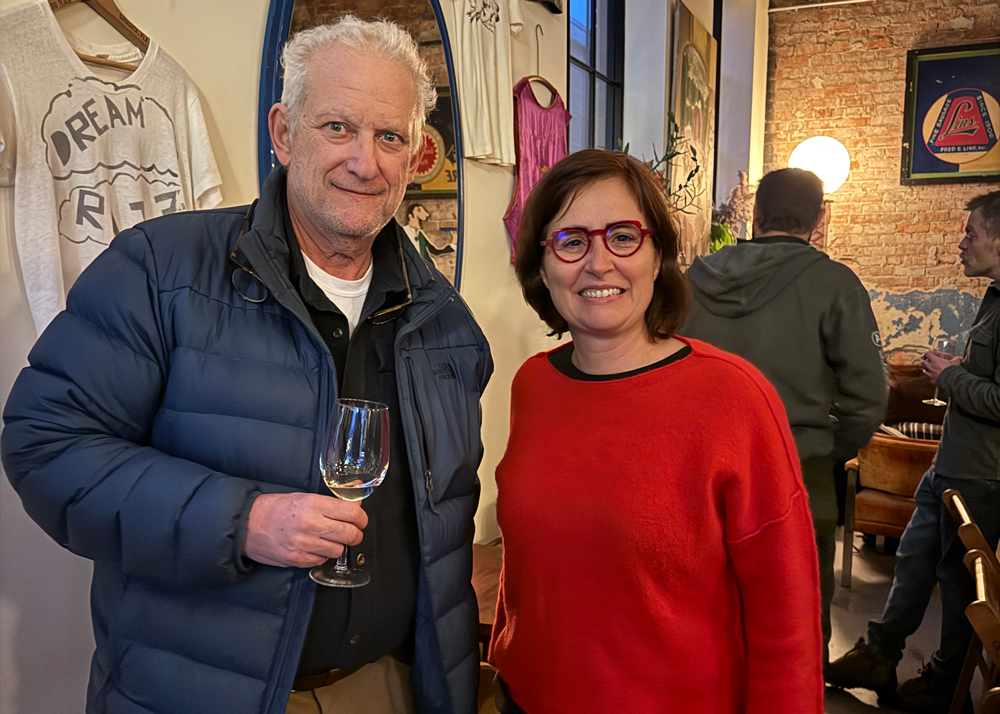
In speaking with Filipa, I gained a deeper appreciation for her unwavering commitment to biodynamic farming. Beyond the vineyards, livestock now play an essential role in the estate’s ecosystem. Sheep, pigs, and now a donkey roam among the vines, naturally weeding and fertilizing the soils. The pigs also produce piglets that are raised biodynamically for market, an expression of a traditional Portuguese staple integrated into their agricultural philosophy.
Wildflowers grow freely between vineyard rows, encouraging biodiversity and supporting newly introduced beehives. Spring onions and watercress flourish alongside a traditional vegetable garden filled with tomatoes, zucchini, root vegetables and more. The estate is evolving into a fully integrated farm.
Their newest project is constructing a tasting room and dining space where visitors will be able to experience the wines alongside the produce and products grown on the property, completing the connection between vineyard, farm, and table.
About the producer couple, Filipa Pato and William Wouters:
Filipa Pato is a winegrower with a degree in Chemical Engineering from the University of Coimbra. She honed her winemaking skills working along side her father, Luís Pato, the “Baga rebel” and by working harvests in Bordeaux, Mendoza, and Australia, Her husband, William Wouters comes from a restaurant family in Antwerp, Belgium. He built his career as a chef, sommelier, and restaurateur. Together, they combine their experience in wine and hospitality, sharing a practical and global perspective shaped by years of collaboration with growers, sommeliers, and wine lovers.